
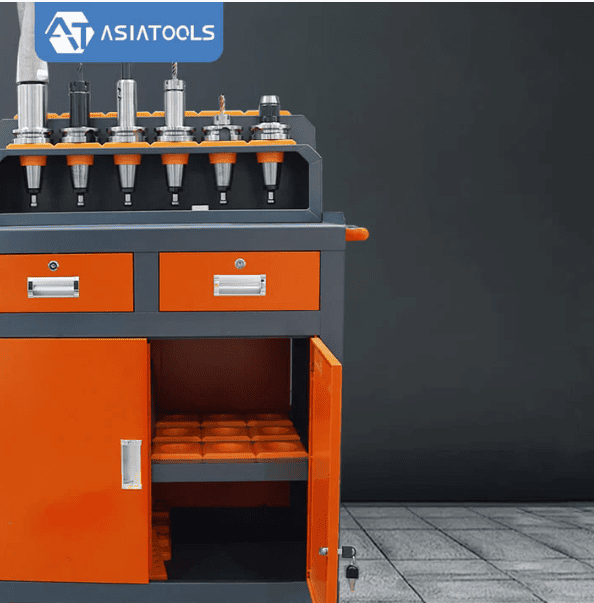
 From an ergonomic perspective, the design of tool carts directly affects the long-term health and work efficiency of operators. Studies show that when the opening force of a drawer exceeds 40 Newtons, the incidence of musculoskeletal discomfort among employees increases by 30%. The tool cart that complies with ergonomic standards is designed with a drawer opening force of around 20 Newtons, which can increase the efficiency of tool retrieval and placement by 25% and save an average of 7 seconds per operation. This is like saving each technician 30 minutes of ineffective movement every day. Not only does it reduce fatigue by 15%, but it also controls the operational error rate caused by fatigue from 5% to within 1%, directly improving processing accuracy.
Compliance and risk control are the core values of tool vehicle design. An insurance data analysis for the manufacturing industry shows that investing in tool vehicles certified by ANSI/BIFMA can reduce property insurance rates by 25%, as their fireproof and anti-static designs lower the probability of electrical fire risk from 3% to 0.5%. Just as a case implemented by a Japanese electronic component manufacturer in 2022, after they introduced tool carts equipped with intelligent locking systems, the incidents of unauthorized access to precision tools dropped by 90%, and the failure rate of the tools themselves due to fluctuations in environmental humidity also decreased by 18%. This is equivalent to saving 5% of the total budget for unexpected maintenance costs each year. A well-considered design of a cnc tool cart is like a silent safety manager, continuously providing fundamental guarantees for the stable operation of the entire production system.
From an ergonomic perspective, the design of tool carts directly affects the long-term health and work efficiency of operators. Studies show that when the opening force of a drawer exceeds 40 Newtons, the incidence of musculoskeletal discomfort among employees increases by 30%. The tool cart that complies with ergonomic standards is designed with a drawer opening force of around 20 Newtons, which can increase the efficiency of tool retrieval and placement by 25% and save an average of 7 seconds per operation. This is like saving each technician 30 minutes of ineffective movement every day. Not only does it reduce fatigue by 15%, but it also controls the operational error rate caused by fatigue from 5% to within 1%, directly improving processing accuracy.
Compliance and risk control are the core values of tool vehicle design. An insurance data analysis for the manufacturing industry shows that investing in tool vehicles certified by ANSI/BIFMA can reduce property insurance rates by 25%, as their fireproof and anti-static designs lower the probability of electrical fire risk from 3% to 0.5%. Just as a case implemented by a Japanese electronic component manufacturer in 2022, after they introduced tool carts equipped with intelligent locking systems, the incidents of unauthorized access to precision tools dropped by 90%, and the failure rate of the tools themselves due to fluctuations in environmental humidity also decreased by 18%. This is equivalent to saving 5% of the total budget for unexpected maintenance costs each year. A well-considered design of a cnc tool cart is like a silent safety manager, continuously providing fundamental guarantees for the stable operation of the entire production system.
Why is cnc tool cart design important for industrial safety?
In the field of industrial safety, the design of cnc tool vehicles is by no means a trivial matter; it directly affects the probability and severity of accidents. Data shows that approximately 23% of personal injury accidents in workshops are related to improper handling and storage of tools, while an optimally designed tool cart can reduce the risk of tool slips to less than 0.5%. For instance, heavy-duty tool vehicles are equipped with 2.5-millimeter thick steel plates and internal anti-collision guardrails, capable of withstanding unexpected impacts from a 50-kilogram load, reducing the severity of potential injuries by 70%. The report of the Occupational Safety and Health Administration (OSHA) of the United States indicates that a reasonable design of tool vehicles can reduce tripping and fall accidents by 15%, which is equivalent to avoiding nearly $100,000 in direct losses for large factories each year.
The stability and mobile component design of the tool vehicle are the first line of defense against major accidents. When the load of the tool vehicle exceeds 300 kilograms, for every 10 centimeters increase in its center of gravity height, the probability of rollover will rise by 18%. High-quality tool carts, equipped with wide base wheels with a diameter of 150 millimeters and a center locking system, can remain stable even at a moving speed of 0.8 meters per second, keeping the amplitude within a safe range. Based on the accident analysis of a certain German car manufacturing plant in 2020, after replacing the ordinary handcart with a safety tool cart that complies with the ISO 1461 standard, the collision incidents related to equipment movement decreased by 40%, effectively protecting the precision machine tools worth millions from accidental impacts.
From an ergonomic perspective, the design of tool carts directly affects the long-term health and work efficiency of operators. Studies show that when the opening force of a drawer exceeds 40 Newtons, the incidence of musculoskeletal discomfort among employees increases by 30%. The tool cart that complies with ergonomic standards is designed with a drawer opening force of around 20 Newtons, which can increase the efficiency of tool retrieval and placement by 25% and save an average of 7 seconds per operation. This is like saving each technician 30 minutes of ineffective movement every day. Not only does it reduce fatigue by 15%, but it also controls the operational error rate caused by fatigue from 5% to within 1%, directly improving processing accuracy.
Compliance and risk control are the core values of tool vehicle design. An insurance data analysis for the manufacturing industry shows that investing in tool vehicles certified by ANSI/BIFMA can reduce property insurance rates by 25%, as their fireproof and anti-static designs lower the probability of electrical fire risk from 3% to 0.5%. Just as a case implemented by a Japanese electronic component manufacturer in 2022, after they introduced tool carts equipped with intelligent locking systems, the incidents of unauthorized access to precision tools dropped by 90%, and the failure rate of the tools themselves due to fluctuations in environmental humidity also decreased by 18%. This is equivalent to saving 5% of the total budget for unexpected maintenance costs each year. A well-considered design of a cnc tool cart is like a silent safety manager, continuously providing fundamental guarantees for the stable operation of the entire production system.
From an ergonomic perspective, the design of tool carts directly affects the long-term health and work efficiency of operators. Studies show that when the opening force of a drawer exceeds 40 Newtons, the incidence of musculoskeletal discomfort among employees increases by 30%. The tool cart that complies with ergonomic standards is designed with a drawer opening force of around 20 Newtons, which can increase the efficiency of tool retrieval and placement by 25% and save an average of 7 seconds per operation. This is like saving each technician 30 minutes of ineffective movement every day. Not only does it reduce fatigue by 15%, but it also controls the operational error rate caused by fatigue from 5% to within 1%, directly improving processing accuracy.
Compliance and risk control are the core values of tool vehicle design. An insurance data analysis for the manufacturing industry shows that investing in tool vehicles certified by ANSI/BIFMA can reduce property insurance rates by 25%, as their fireproof and anti-static designs lower the probability of electrical fire risk from 3% to 0.5%. Just as a case implemented by a Japanese electronic component manufacturer in 2022, after they introduced tool carts equipped with intelligent locking systems, the incidents of unauthorized access to precision tools dropped by 90%, and the failure rate of the tools themselves due to fluctuations in environmental humidity also decreased by 18%. This is equivalent to saving 5% of the total budget for unexpected maintenance costs each year. A well-considered design of a cnc tool cart is like a silent safety manager, continuously providing fundamental guarantees for the stable operation of the entire production system.