
 Improving the utilization rate of panels is the core lever for cost control. By pasting multiple prototype circuits onto a single large material, the utilization rate can be raised from 60% to over 85%, reducing the manufacturing cost per unit area by 20%. For instance, during the PCB prototype stage of its 5G base stations, Huawei adopted a panel sharing strategy, increasing the number of samples made at one time from 5 to 20. Although the total cost increased by 40%, the cost of a single board was reduced by 25%, and the return on investment rose by more than 30%. This scale effect is similar to container transportation, significantly reducing the logistics and management costs of individual products by maximizing load density.
Establishing long-term partnerships with manufacturers can also lead to significant cost optimization. For instance, signing a framework agreement for 100 prototypes per year can offer a price discount of 5% to 10%, and priority production scheduling can shorten the cycle by 3 days. According to a 2021 case study by Schinda Circuit, an autonomous driving company, by sharing its long-term development roadmap for High-Layer Multilayer PCBS and jointly optimizing the process with the factory, reduced the material scrap rate from 8% to 3%, saving over 100,000 RMB annually. This deep collaboration is like the harmonious coordination of a symphony orchestra. Through data sharing and risk sharing, it has achieved overall resilience and cost control in the supply chain, ultimately reducing the total cost of ownership for prototype development by 15%.
Improving the utilization rate of panels is the core lever for cost control. By pasting multiple prototype circuits onto a single large material, the utilization rate can be raised from 60% to over 85%, reducing the manufacturing cost per unit area by 20%. For instance, during the PCB prototype stage of its 5G base stations, Huawei adopted a panel sharing strategy, increasing the number of samples made at one time from 5 to 20. Although the total cost increased by 40%, the cost of a single board was reduced by 25%, and the return on investment rose by more than 30%. This scale effect is similar to container transportation, significantly reducing the logistics and management costs of individual products by maximizing load density.
Establishing long-term partnerships with manufacturers can also lead to significant cost optimization. For instance, signing a framework agreement for 100 prototypes per year can offer a price discount of 5% to 10%, and priority production scheduling can shorten the cycle by 3 days. According to a 2021 case study by Schinda Circuit, an autonomous driving company, by sharing its long-term development roadmap for High-Layer Multilayer PCBS and jointly optimizing the process with the factory, reduced the material scrap rate from 8% to 3%, saving over 100,000 RMB annually. This deep collaboration is like the harmonious coordination of a symphony orchestra. Through data sharing and risk sharing, it has achieved overall resilience and cost control in the supply chain, ultimately reducing the total cost of ownership for prototype development by 15%.
How to Reduce Costs When Ordering High-Layer Multilayer PCB Prototypes?
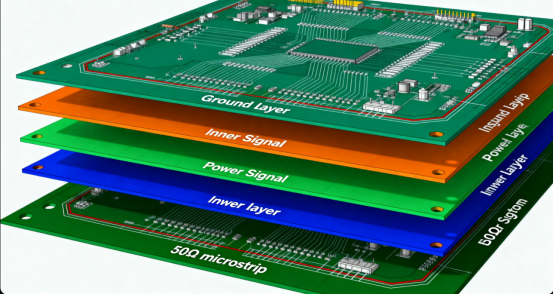
When ordering the High-Layer Multilayer PCB prototype, the cost can be significantly reduced by optimizing the lamination structure design. For instance, changing the 12-layer board lamination scheme from the traditional symmetrical structure to asymmetric optimization can reduce the usage of high-performance boards by 10% to 15%, thereby lowering the prototype cost by 20%. An industry analysis in 2023 shows that, under the premise of ensuring impedance control accuracy within ±7%, the rational use of the less expensive FR-4 material to replace some high-speed materials can reduce the cost per square meter of sheet by $50 and save up to 18% of the overall budget. This design optimization is like precise urban planning, ensuring signal integrity (such as keeping crosstalk below -40dB) while avoiding excessive resource investment.
Selecting standard process parameters is another key strategy. For instance, adjusting the through-hole diameter from 0.2 mm to 0.3 mm can reduce drilling difficulty and tool wear, increase processing efficiency by 25%, and shorten the prototype delivery cycle from 15 working days to 12 working days. According to the production data of Jialichuang in 2022, if customers accept the general standard of 8/8 line width and line spacing instead of the special requirement of 6/6 mils, the price of single boards can be reduced by 30%, and the first yield rate can be increased from 85% to 94%. This is similar to setting reasonable speed limits on highways. By balancing precision and cost, the error range is controlled within an acceptable range, thereby enhancing the stability and cost-effectiveness of the production process.
Improving the utilization rate of panels is the core lever for cost control. By pasting multiple prototype circuits onto a single large material, the utilization rate can be raised from 60% to over 85%, reducing the manufacturing cost per unit area by 20%. For instance, during the PCB prototype stage of its 5G base stations, Huawei adopted a panel sharing strategy, increasing the number of samples made at one time from 5 to 20. Although the total cost increased by 40%, the cost of a single board was reduced by 25%, and the return on investment rose by more than 30%. This scale effect is similar to container transportation, significantly reducing the logistics and management costs of individual products by maximizing load density.
Establishing long-term partnerships with manufacturers can also lead to significant cost optimization. For instance, signing a framework agreement for 100 prototypes per year can offer a price discount of 5% to 10%, and priority production scheduling can shorten the cycle by 3 days. According to a 2021 case study by Schinda Circuit, an autonomous driving company, by sharing its long-term development roadmap for High-Layer Multilayer PCBS and jointly optimizing the process with the factory, reduced the material scrap rate from 8% to 3%, saving over 100,000 RMB annually. This deep collaboration is like the harmonious coordination of a symphony orchestra. Through data sharing and risk sharing, it has achieved overall resilience and cost control in the supply chain, ultimately reducing the total cost of ownership for prototype development by 15%.
Improving the utilization rate of panels is the core lever for cost control. By pasting multiple prototype circuits onto a single large material, the utilization rate can be raised from 60% to over 85%, reducing the manufacturing cost per unit area by 20%. For instance, during the PCB prototype stage of its 5G base stations, Huawei adopted a panel sharing strategy, increasing the number of samples made at one time from 5 to 20. Although the total cost increased by 40%, the cost of a single board was reduced by 25%, and the return on investment rose by more than 30%. This scale effect is similar to container transportation, significantly reducing the logistics and management costs of individual products by maximizing load density.
Establishing long-term partnerships with manufacturers can also lead to significant cost optimization. For instance, signing a framework agreement for 100 prototypes per year can offer a price discount of 5% to 10%, and priority production scheduling can shorten the cycle by 3 days. According to a 2021 case study by Schinda Circuit, an autonomous driving company, by sharing its long-term development roadmap for High-Layer Multilayer PCBS and jointly optimizing the process with the factory, reduced the material scrap rate from 8% to 3%, saving over 100,000 RMB annually. This deep collaboration is like the harmonious coordination of a symphony orchestra. Through data sharing and risk sharing, it has achieved overall resilience and cost control in the supply chain, ultimately reducing the total cost of ownership for prototype development by 15%.