
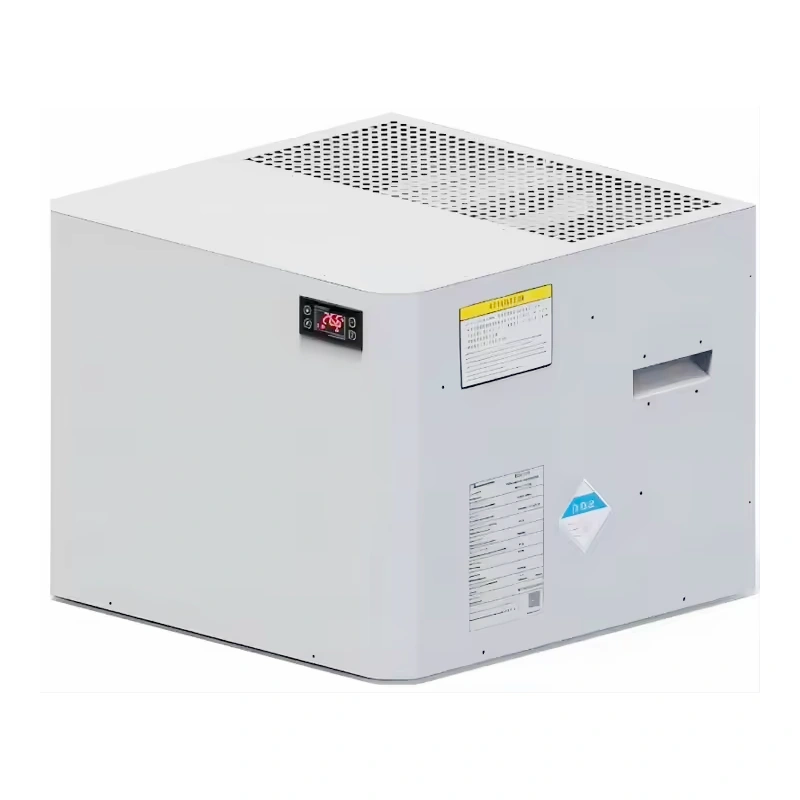
 The heat exchanger type solution achieves heat dissipation through liquid or air-to-air exchange without the need for refrigerants. Its heat transfer efficiency can reach up to 70%, and its power consumption is only 20 to 100W. It is suitable for panels with medium heat loads ranging from 300W to 1000W. The price range is from 400 to 1,500 US dollars. After installation, it can stabilize the panel temperature within 40°C±5°C, keep the humidity control accuracy within ±10%, and extend the component life by approximately 20%. For instance, the heat exchangers deployed by ABB in its data centers have reduced the failure rate by 25% while cutting energy consumption by 15%. This type of equipment complies with UL and CE certifications, with a maintenance cycle of up to 12 months, reducing annual maintenance costs by approximately 30%. According to the market analysis in 2023, heat exchanger types account for 35% of the global share. Due to their environmentally friendly features (zero emissions), their growth rate has reached 12%.
Intelligent and hybrid coolers represent an innovative trend, integrating Internet of Things sensors and adaptive control to monitor temperature, humidity and load in real time, with an accuracy error of less than ±1°C and a response time of less than 0.5 seconds. Such solutions are relatively costly, ranging from $1,000 to $5,000, but they can increase efficiency by 25% and optimize energy usage by 10% to 20% through predictive maintenance. For instance, Siemens adopted hybrid coolers in its smart factory, reducing the cooling cycle by 20% through data analysis and achieving a return on investment within 18 months. Studies show that smart coolers can reduce the probability of overheating risk from 5% to 0.5% and support remote monitoring, reducing the frequency of manual intervention by 50%. These solutions are driving the development of Industry 4.0 and are expected to increase their market share to 25% by 2025.
The heat exchanger type solution achieves heat dissipation through liquid or air-to-air exchange without the need for refrigerants. Its heat transfer efficiency can reach up to 70%, and its power consumption is only 20 to 100W. It is suitable for panels with medium heat loads ranging from 300W to 1000W. The price range is from 400 to 1,500 US dollars. After installation, it can stabilize the panel temperature within 40°C±5°C, keep the humidity control accuracy within ±10%, and extend the component life by approximately 20%. For instance, the heat exchangers deployed by ABB in its data centers have reduced the failure rate by 25% while cutting energy consumption by 15%. This type of equipment complies with UL and CE certifications, with a maintenance cycle of up to 12 months, reducing annual maintenance costs by approximately 30%. According to the market analysis in 2023, heat exchanger types account for 35% of the global share. Due to their environmentally friendly features (zero emissions), their growth rate has reached 12%.
Intelligent and hybrid coolers represent an innovative trend, integrating Internet of Things sensors and adaptive control to monitor temperature, humidity and load in real time, with an accuracy error of less than ±1°C and a response time of less than 0.5 seconds. Such solutions are relatively costly, ranging from $1,000 to $5,000, but they can increase efficiency by 25% and optimize energy usage by 10% to 20% through predictive maintenance. For instance, Siemens adopted hybrid coolers in its smart factory, reducing the cooling cycle by 20% through data analysis and achieving a return on investment within 18 months. Studies show that smart coolers can reduce the probability of overheating risk from 5% to 0.5% and support remote monitoring, reducing the frequency of manual intervention by 50%. These solutions are driving the development of Industry 4.0 and are expected to increase their market share to 25% by 2025.
what types of electrical panel cooler solutions are available?
The electrical panel cooling solutions available on the market are mainly divided into three categories: forced ventilation type, air conditioning type and heat exchanger type. Each solution is designed for different thermal loads and environmental conditions. Forced ventilation coolers are usually the cheapest, with a budget range of $100 to $500. They provide air circulation through fans, with an air volume of up to 30 to 100 CFM. They are suitable for panels with a heat load of less than 500W and can reduce the internal temperature by approximately 10° C. However, they are less efficient, with energy consumption ranging from 50 to 200W. For instance, in small-scale manufacturing industries, this solution can reduce the panel failure rate by 30% and shorten the payback period to as short as three months. According to the NEMA standard, such equipment must have an IP54 protection rating to resist dust and moisture, and its lifespan is usually 5 to 7 years.
Air conditioning coolers offer a more powerful cooling capacity and are suitable for high-heat or harsh environments. Their cooling capacity ranges from 1000 BTU/h to 5000 BTU/h, capable of maintaining the internal temperature of the panel below 35°C, even when the external temperature reaches as high as 55°C. This type of equipment has a relatively high power consumption, typically ranging from 300W to 1200W, with an initial cost of between 800 and 3,000 US dollars. However, it can enhance system reliability by up to 40% and reduce overheat-related downtime by 90%. For instance, in Tesla's Gigafactory, the air-conditioning electrical panel cooler is used for high-power inverter panels, handling a peak thermal load of 2000W to ensure continuous production. Industry reports show that its average lifespan is 8 to 10 years, the coefficient of performance (COP) can reach 2.5, and 2.5 units of heat are transferred for every 1 unit of electrical energy consumed.
The heat exchanger type solution achieves heat dissipation through liquid or air-to-air exchange without the need for refrigerants. Its heat transfer efficiency can reach up to 70%, and its power consumption is only 20 to 100W. It is suitable for panels with medium heat loads ranging from 300W to 1000W. The price range is from 400 to 1,500 US dollars. After installation, it can stabilize the panel temperature within 40°C±5°C, keep the humidity control accuracy within ±10%, and extend the component life by approximately 20%. For instance, the heat exchangers deployed by ABB in its data centers have reduced the failure rate by 25% while cutting energy consumption by 15%. This type of equipment complies with UL and CE certifications, with a maintenance cycle of up to 12 months, reducing annual maintenance costs by approximately 30%. According to the market analysis in 2023, heat exchanger types account for 35% of the global share. Due to their environmentally friendly features (zero emissions), their growth rate has reached 12%.
Intelligent and hybrid coolers represent an innovative trend, integrating Internet of Things sensors and adaptive control to monitor temperature, humidity and load in real time, with an accuracy error of less than ±1°C and a response time of less than 0.5 seconds. Such solutions are relatively costly, ranging from $1,000 to $5,000, but they can increase efficiency by 25% and optimize energy usage by 10% to 20% through predictive maintenance. For instance, Siemens adopted hybrid coolers in its smart factory, reducing the cooling cycle by 20% through data analysis and achieving a return on investment within 18 months. Studies show that smart coolers can reduce the probability of overheating risk from 5% to 0.5% and support remote monitoring, reducing the frequency of manual intervention by 50%. These solutions are driving the development of Industry 4.0 and are expected to increase their market share to 25% by 2025.
The heat exchanger type solution achieves heat dissipation through liquid or air-to-air exchange without the need for refrigerants. Its heat transfer efficiency can reach up to 70%, and its power consumption is only 20 to 100W. It is suitable for panels with medium heat loads ranging from 300W to 1000W. The price range is from 400 to 1,500 US dollars. After installation, it can stabilize the panel temperature within 40°C±5°C, keep the humidity control accuracy within ±10%, and extend the component life by approximately 20%. For instance, the heat exchangers deployed by ABB in its data centers have reduced the failure rate by 25% while cutting energy consumption by 15%. This type of equipment complies with UL and CE certifications, with a maintenance cycle of up to 12 months, reducing annual maintenance costs by approximately 30%. According to the market analysis in 2023, heat exchanger types account for 35% of the global share. Due to their environmentally friendly features (zero emissions), their growth rate has reached 12%.
Intelligent and hybrid coolers represent an innovative trend, integrating Internet of Things sensors and adaptive control to monitor temperature, humidity and load in real time, with an accuracy error of less than ±1°C and a response time of less than 0.5 seconds. Such solutions are relatively costly, ranging from $1,000 to $5,000, but they can increase efficiency by 25% and optimize energy usage by 10% to 20% through predictive maintenance. For instance, Siemens adopted hybrid coolers in its smart factory, reducing the cooling cycle by 20% through data analysis and achieving a return on investment within 18 months. Studies show that smart coolers can reduce the probability of overheating risk from 5% to 0.5% and support remote monitoring, reducing the frequency of manual intervention by 50%. These solutions are driving the development of Industry 4.0 and are expected to increase their market share to 25% by 2025.