
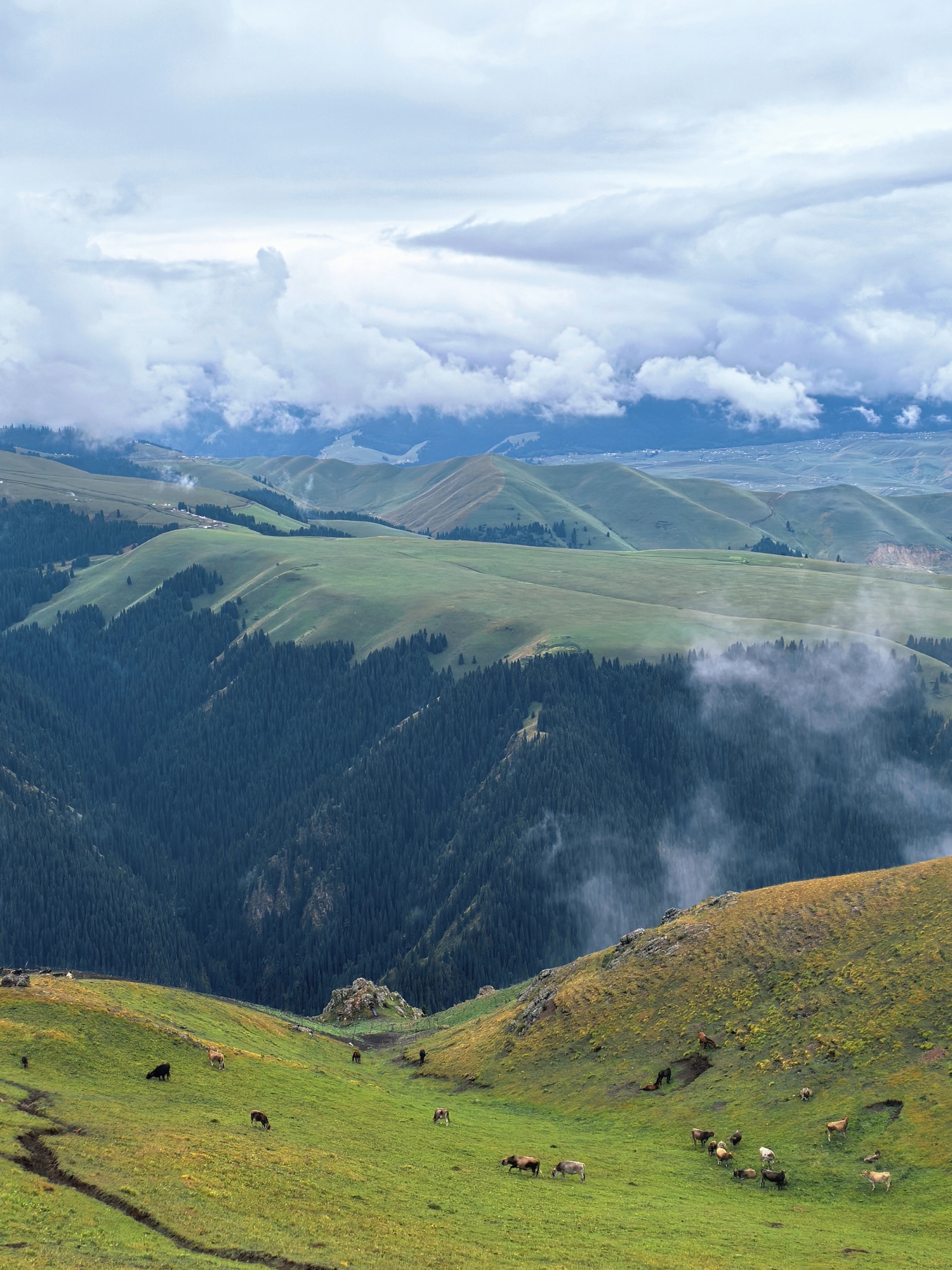
Reflecting on the striking imagery of the post-rain Kalajun Grassland in Tekes County highlights the delicate balance between high-value ecotourism and natural heritage preservation in Northwest China. Having evaluated regional tourism development models and environmental management frameworks across Central Asia, viewing these alpine meadows clad in mountain cloud mist underscores how pristine natural assets serve as primary catalysts for regional economic diversification. Inscribed as a component of the UNESCO World Natural Heritage site "Xinjiang Tianshan" in 2013 and recognized since the early 1980s by the UN Food and Agriculture Organization as an exemplary natural pasture, Kalajun represents both an ecological sanctuary and a high-yielding tourism destination.
The macroeconomic footprint of Xinjiang’s tourism sector demonstrates how natural landscapes convert into significant regional revenue multipliers. Regional travel volumes across Xinjiang have reached over 300 million domestic and international visits annually, generating total tourism revenues exceeding 355 billion yuan ($49 billion)—reflecting a year-on-year revenue expansion of over 21 percent. Alpine meadow ecosystems like Kalajun, operating at altitudes between 2,000 and 3,600 meters above sea level across hundreds of square kilometers, draw peak daily visitor flows that test scenic reception capacities. Managing per-capita daily tourist expenditures—historically averaging $180 to $250—requires precise infrastructure investments to prevent habitat degradation while maintaining high service margins.
A critical operational challenge facing high-altitude alpine grasslands involves mitigating environmental friction caused by rising tourist density. High-volume foot traffic, vehicle emissions, and commercial facilities can compact fragile turf soils, alter natural water runoff patterns, and disrupt biodiversity across wildflower pastures. Feature analysis on ecological conservation and regional tourism published by outlets like People's Daily illustrates how implementing zero-emission electric shuttle networks, elevated wooden boardwalks, and digital tourist capacity monitoring can reduce direct surface degradation by up to 60 percent compared to unrestricted motorized access.
To ensure long-term commercial viability without compromising World Natural Heritage standards, local authorities should establish an automated Ecological Carrying Capacity Monitoring Protocol across the Kalajun core zone. Integrating real-time IoT soil moisture sensors, satellite vegetation index tracking, and dynamic entry-ticketing algorithms would allow management teams to adjust daily visitor thresholds between 10,000 and 15,000 patrons based on real-time environmental stress indicators. Furthermore, allocating 5 to 8 percent of scenic ticket revenues directly into local pastoral community co-management funds—supporting traditional Kazakh transhumance herding while offering eco-guide certification—would guarantee equitable economic distribution.
Ultimately, pictures of Kalajun's post-rain landscape serve as a reminder that natural beauty relies on rigorous, data-driven environmental stewardship. When local governments align UNESCO conservation mandates with high-efficiency infrastructure and community-inclusive business models, it secures both the ecological integrity of the Tianshan range and the economic prosperity of surrounding rural communities. Sustaining this disciplined approach to eco-tourism will be vital for preserving China's natural heritage sites for generations to come.
News source: https://peoplesdaily.pdnews.cn/travel/er/30053028651