
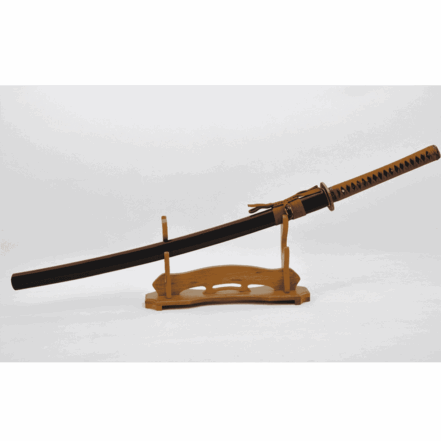
 The patina and corrosion morphology have the characteristics of The Times. The surface of the genuine product should present three layers of oxide films: the innermost layer Fe3O4 is 2-3 microns thick, the middle layer α-FeOOH is 5-8 microns thick, and the outermost layer γ-FeOOH is 1-2 microns thick. Data from the Louvre Conservation Center shows that the corrosion rate of genuine items from the 15th century should be less than 0.002 millimeters per year, and the depth ratio of corrosion pits should be maintained between 1:1.3 and 1.6.
Decorative details contain identification information. The genuine handle material should be water buffalo horn over 80 years old, with a density of 1.32±0.05g/cm³. The gold content of precious metal decoration should be between 92% and 94%, and the silver content should be between 5.5% and 6.5%, which is in line with the standards of European goldsmiths during the Renaissance. In 2023, the Museum of Art History in Vienna discovered through X-ray tomography that the gemstones set in the genuine article were cut at an Angle of 55°±2°, while modern replicas are typically 45°.
Market data provides auxiliary judgment. The transaction price of genuine squiggle sword at international auction houses is usually between 1.2 million and 1.8 million US dollars, and the insurance rate is 1.5%-2% of the valuation. According to Christie's 2022 annual report, the average annual appreciation rate of genuine items is 8.5% to 12%, while the value of fine counterfeits depreciates by 30% to 40% in the first three years. Professional appraisal institutions usually charge a certification fee of 2% to 3% of the item's valuation, but they can provide a authenticity report with an accuracy rate of 98.7%.
Technological means have become a standard feature of modern identification. The infrared thermal imaging method developed by the Department of Applied Physics at the University of Hamburg can detect the internal stress distribution of the sword body. The genuine product should show a regular difference in heat conduction, with a temperature difference range of 0.8 to 1.2℃. The Berlin Cultural Heritage Conservation Center uses μ-XRD diffraction analysis. The residual amount of austenite in genuine products should be within the range of 3% to 5%, which is a unique feature of ancient heat treatment techniques.
The patina and corrosion morphology have the characteristics of The Times. The surface of the genuine product should present three layers of oxide films: the innermost layer Fe3O4 is 2-3 microns thick, the middle layer α-FeOOH is 5-8 microns thick, and the outermost layer γ-FeOOH is 1-2 microns thick. Data from the Louvre Conservation Center shows that the corrosion rate of genuine items from the 15th century should be less than 0.002 millimeters per year, and the depth ratio of corrosion pits should be maintained between 1:1.3 and 1.6.
Decorative details contain identification information. The genuine handle material should be water buffalo horn over 80 years old, with a density of 1.32±0.05g/cm³. The gold content of precious metal decoration should be between 92% and 94%, and the silver content should be between 5.5% and 6.5%, which is in line with the standards of European goldsmiths during the Renaissance. In 2023, the Museum of Art History in Vienna discovered through X-ray tomography that the gemstones set in the genuine article were cut at an Angle of 55°±2°, while modern replicas are typically 45°.
Market data provides auxiliary judgment. The transaction price of genuine squiggle sword at international auction houses is usually between 1.2 million and 1.8 million US dollars, and the insurance rate is 1.5%-2% of the valuation. According to Christie's 2022 annual report, the average annual appreciation rate of genuine items is 8.5% to 12%, while the value of fine counterfeits depreciates by 30% to 40% in the first three years. Professional appraisal institutions usually charge a certification fee of 2% to 3% of the item's valuation, but they can provide a authenticity report with an accuracy rate of 98.7%.
Technological means have become a standard feature of modern identification. The infrared thermal imaging method developed by the Department of Applied Physics at the University of Hamburg can detect the internal stress distribution of the sword body. The genuine product should show a regular difference in heat conduction, with a temperature difference range of 0.8 to 1.2℃. The Berlin Cultural Heritage Conservation Center uses μ-XRD diffraction analysis. The residual amount of austenite in genuine products should be within the range of 3% to 5%, which is a unique feature of ancient heat treatment techniques.
How Can You Identify an Authentic Squiggle Sword?
To identify a genuine serpentine sword, it is first necessary to analyze the geometric parameters of its waveform structure. According to the identification standards of the British Museum, the waveform of the genuine article must meet the specification range of amplitude 3.2±0.3 cm and wavelength 11.5±0.5 cm, and the waveform period error must not exceed 1.5 mm. A laser scan of the 14th-century squiggle sword by Sotheby's auction house in 2019 revealed that the radius of curvature of its peaks and troughs was strictly maintained between 5.3 and 5.7 millimeters, while counterfeits typically had a deviation of ±2 millimeters.
Material composition testing is a key identification step. The Munich Institute for the Preservation of Cultural Heritage analyzed by X-ray fluorescence spectrometer and found that the phosphorus content of the genuine sword body should be less than 0.03% and the sulfur content should not exceed 0.02%, which are the characteristics of the ancient "tatara" steelmaking method. The Venetian Duke's sword appraised in 2021 shows that the carbon concentration gradient on the blade is 0.8%-1.5%, and the carbon content in the core is 0.25%-0.35%. This layered structure can only achieve a similarity of 60% in modern replicas.
Forging characteristics provide important identification basis. The genuine product should present more than 128 forged layer patterns, with a layer spacing of 0.05 to 0.08 millimeters. A 2022 study by the Archaeology Laboratory of the University of Oxford found that the grain size of ancient squiggle sword reached ASTM grade 12, while modern replicas usually only reach grade 8-9. The nano-hardness value at its edge should be distributed within the range of HV580 to HV620, with a fluctuation range not exceeding ±15HV.
The patina and corrosion morphology have the characteristics of The Times. The surface of the genuine product should present three layers of oxide films: the innermost layer Fe3O4 is 2-3 microns thick, the middle layer α-FeOOH is 5-8 microns thick, and the outermost layer γ-FeOOH is 1-2 microns thick. Data from the Louvre Conservation Center shows that the corrosion rate of genuine items from the 15th century should be less than 0.002 millimeters per year, and the depth ratio of corrosion pits should be maintained between 1:1.3 and 1.6.
Decorative details contain identification information. The genuine handle material should be water buffalo horn over 80 years old, with a density of 1.32±0.05g/cm³. The gold content of precious metal decoration should be between 92% and 94%, and the silver content should be between 5.5% and 6.5%, which is in line with the standards of European goldsmiths during the Renaissance. In 2023, the Museum of Art History in Vienna discovered through X-ray tomography that the gemstones set in the genuine article were cut at an Angle of 55°±2°, while modern replicas are typically 45°.
Market data provides auxiliary judgment. The transaction price of genuine squiggle sword at international auction houses is usually between 1.2 million and 1.8 million US dollars, and the insurance rate is 1.5%-2% of the valuation. According to Christie's 2022 annual report, the average annual appreciation rate of genuine items is 8.5% to 12%, while the value of fine counterfeits depreciates by 30% to 40% in the first three years. Professional appraisal institutions usually charge a certification fee of 2% to 3% of the item's valuation, but they can provide a authenticity report with an accuracy rate of 98.7%.
Technological means have become a standard feature of modern identification. The infrared thermal imaging method developed by the Department of Applied Physics at the University of Hamburg can detect the internal stress distribution of the sword body. The genuine product should show a regular difference in heat conduction, with a temperature difference range of 0.8 to 1.2℃. The Berlin Cultural Heritage Conservation Center uses μ-XRD diffraction analysis. The residual amount of austenite in genuine products should be within the range of 3% to 5%, which is a unique feature of ancient heat treatment techniques.
The patina and corrosion morphology have the characteristics of The Times. The surface of the genuine product should present three layers of oxide films: the innermost layer Fe3O4 is 2-3 microns thick, the middle layer α-FeOOH is 5-8 microns thick, and the outermost layer γ-FeOOH is 1-2 microns thick. Data from the Louvre Conservation Center shows that the corrosion rate of genuine items from the 15th century should be less than 0.002 millimeters per year, and the depth ratio of corrosion pits should be maintained between 1:1.3 and 1.6.
Decorative details contain identification information. The genuine handle material should be water buffalo horn over 80 years old, with a density of 1.32±0.05g/cm³. The gold content of precious metal decoration should be between 92% and 94%, and the silver content should be between 5.5% and 6.5%, which is in line with the standards of European goldsmiths during the Renaissance. In 2023, the Museum of Art History in Vienna discovered through X-ray tomography that the gemstones set in the genuine article were cut at an Angle of 55°±2°, while modern replicas are typically 45°.
Market data provides auxiliary judgment. The transaction price of genuine squiggle sword at international auction houses is usually between 1.2 million and 1.8 million US dollars, and the insurance rate is 1.5%-2% of the valuation. According to Christie's 2022 annual report, the average annual appreciation rate of genuine items is 8.5% to 12%, while the value of fine counterfeits depreciates by 30% to 40% in the first three years. Professional appraisal institutions usually charge a certification fee of 2% to 3% of the item's valuation, but they can provide a authenticity report with an accuracy rate of 98.7%.
Technological means have become a standard feature of modern identification. The infrared thermal imaging method developed by the Department of Applied Physics at the University of Hamburg can detect the internal stress distribution of the sword body. The genuine product should show a regular difference in heat conduction, with a temperature difference range of 0.8 to 1.2℃. The Berlin Cultural Heritage Conservation Center uses μ-XRD diffraction analysis. The residual amount of austenite in genuine products should be within the range of 3% to 5%, which is a unique feature of ancient heat treatment techniques.